 Umesh Pande
Quality assurance has always been the backbone of contact center performance, yet the traditional approach has struggled to keep pace with today’s customer expectations. Most teams still depend on manual call sampling, inconsistent scoring styles, and feedback cycles that are too slow to drive real improvement. In fact, many centers review barely 1–3% of interactions, leaving the remaining 97% untouched and full of lost insights. As customers move across chat, email, voice, and social channels, this gap becomes even more visible.
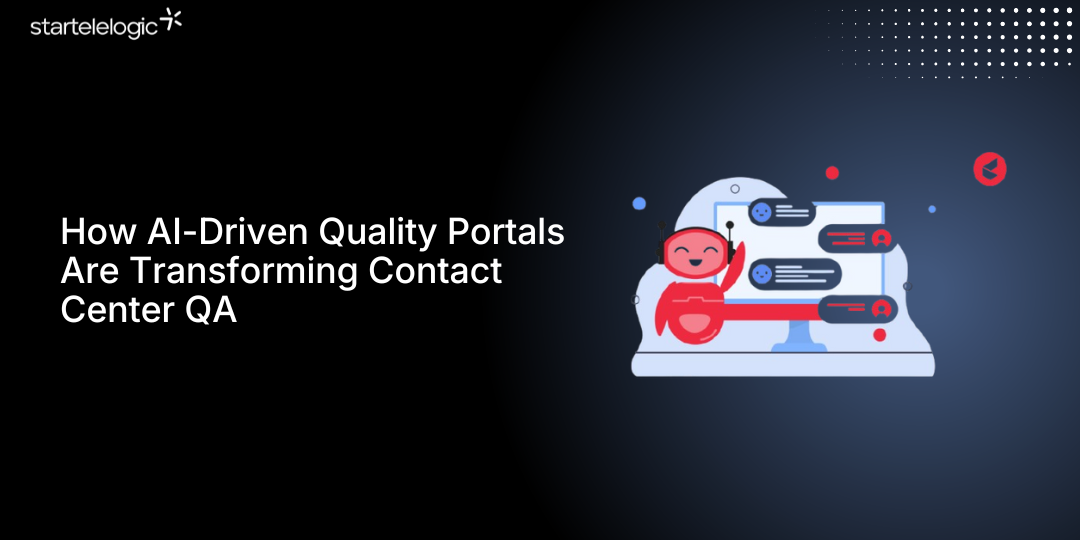
This is exactly where AI-Driven Quality Portals are stepping in and changing the narrative. Instead of overwhelming QA teams with data they don’t have the bandwidth to process, these systems turn every interaction into meaningful intelligence. They bring accuracy, consistency, and real-time analysis to the forefront, allowing leaders to spot trends earlier and agents to receive feedback when it matters most. Ultimately, AI doesn’t replace the human touch—it amplifies it by giving teams a smarter, faster, and more reliable way to understand customer needs and improve service quality every single day.
The Shift Toward Intelligent Quality Assurance
Quality assurance teams today are under immense pressure—managing soaring interaction volumes while trying to maintain consistency and evaluate conversations across voice, chat, email, social media, and messaging channels. The reality is that manual QA simply can’t keep up or scale effectively in this multichannel environment. By integrating AI into the contact center quality process, organizations can uncover patterns, detect performance gaps, and score every interaction with a level of accuracy and coverage that humans alone could never achieve.
Yet, AI isn’t here to replace QA analysts—it elevates their role. While AI handles the repetitive, time-consuming tasks and brings hidden insights to the surface, analysts gain the freedom to focus on what truly drives improvement: coaching agents, refining strategy, and strengthening overall performance. The result is a smarter, more efficient QA ecosystem where people and technology work hand in hand.
Also Read: https://bit.ly/48rYRJJ
What Are AI-Driven Quality Portals?
AI-Driven Quality Portals act as a centralized command center for modern contact centers, bringing every aspect of quality management into one intelligent ecosystem. These platforms use advanced technologies like machine learning, speech and text analytics, sentiment detection, and workflow automation to evaluate, monitor, score, and report on customer interactions at scale. Instead of relying on fragmented tools or manual reviews, they create a unified environment where insights are generated instantly and consistently across every channel.
With capabilities such as automated interaction analysis, real-time detection of quality and compliance markers, predictive scoring, and intelligent pattern recognition, these portals elevate the entire QA process. They even provide personalized coaching recommendations and comprehensive omnichannel visibility, allowing teams to understand performance trends long before they become problems. By consolidating data, insights, evaluations, coaching tools, and accuracy checks into a single digital platform, AI-Driven Quality Portals offer QA teams a smarter, more connected, and significantly more efficient way to manage quality.
How AI Is Transforming Contact Center Quality Assurance
Automation of Quality Evaluations
One of the most significant advantages of Contact center QA automation is the ability to automatically evaluate far more interactions than before. Manual QA often covers only 2–5% of calls, which means the majority of customer experiences remain unseen. AI changes this by reviewing 100% of interactions, allowing quality teams to understand overall patterns rather than isolated examples. Automated evaluation also reduces inconsistencies and biases that naturally occur when humans review calls. By applying the same evaluation standards across every interaction, AI ensures fairness and accuracy. This shift gives QA teams more reliable data and enables them to see trends that were previously invisible.
AI-Powered Insights for Every Interaction
The use of AI-powered QA tools for call centers allows contact centers to go far beyond basic scoring. These tools examine several layers of the conversation: emotional tone, pace, interruptions, keyword themes, silence durations, and compliance steps. They reveal whether the customer was satisfied or frustrated, whether the agent expressed empathy, and whether the correct procedures were followed. Unlike manual evaluations that focus on the content an evaluator can physically hear, AI looks at the deeper behavioral elements that often define customer experience. This leads to higher accuracy in identifying strengths, weaknesses, and opportunities for improvement. It also means quality teams no longer have to rely solely on limited subjective feedback; they now have detailed, data-driven insights for every interaction.
Speech Analytics for Quality Management
The introduction of speech analytics for quality management has been transformative for contact centers. Speech analytics turns recorded calls into structured data that can be examined for trends, compliance patterns, and recurring customer concerns. It helps identify why certain calls escalate, why some customers remain dissatisfied, and what agents may be missing during conversations. By analyzing emotion, sentiment, and phrasing, speech analytics highlights areas where agents excel and areas where they need coaching. It also brings transparency to customer pain points, helping businesses improve processes and reduce repeat contacts. This capability shifts quality assurance from a reactive function to a proactive, insight-driven discipline that influences both agent performance and overall service strategy.
AI Call Monitoring Solutions Deliver Real-Time Support
Traditional QA occurs after the interaction has ended, which means agents receive feedback only after mistakes have already affected the customer. In contrast, modern AI call monitoring solutions offer real-time support. If an agent forgets a mandatory disclosure, speaks too fast, or triggers customer frustration unintentionally, AI can flag it immediately. The system may guide the agent to slow down, show empathy, clarify details, or follow specific steps. This real-time assistance reduces the risk of errors and improves the customer experience during the call itself. Supervisors also benefit because they no longer need to monitor calls live in the same volume; AI handles it and alerts them only when necessary. This creates a more supportive and less stressful environment for agents.
Real-Time QA Insights With AI
The value of real-time QA insights with AI lies in the speed at which contact centers can identify and resolve issues. Instead of waiting for weekly or monthly reports, supervisors gain instant visibility into what is happening across teams and channels. If an issue begins to affect multiple interactions—such as incorrect information about a billing change, system outages, or a new product defect—AI detects it quickly by analyzing conversation patterns. Supervisors can act immediately, communicating updates to agents or adjusting instructions. This responsiveness improves the overall customer experience and prevents repeated mistakes from escalating. It also allows performance management to be continuous rather than episodic.
Omnichannel Quality Assurance Automation
As customers increasingly use multiple communication channels, ensuring consistent service quality has become challenging. Omnichannel quality assurance automation solves this by unifying quality standards across voice calls, chat interactions, emails, social media messages, and live messaging apps. AI evaluates each interaction according to shared criteria, delivering a complete view of the customer journey. This approach ensures that an agent is measured fairly regardless of channel and helps organizations identify whether quality issues are channel-specific or universal. By consolidating insights across platforms, contact centers gain a more accurate understanding of customer experience and are better equipped to manage performance in an evolving, multi-channel environment.
Benefits of Using AI-Driven Quality Portals
AI-driven quality portals offer several meaningful advantages. sThey significantly increase accuracy by removing evaluator bias and applying consistent standards. By automating scoring and highlighting risks in real time, QA cycles are accelerated, reducing the need for lengthy manual reviews. Additionally, full visibility is provided across all interactions, not just a small sample, allowing organizations to understand trends and root causes rather than isolated issues. These portals also enhance coaching by offering personalized recommendations based on actual performance patterns. Compliance improves because AI rapidly identifies deviations and ensures that agents follow the required steps. Ultimately, customers benefit the most through faster resolution, smoother conversations, and more reliable service.
How AI-Driven Quality Portals Elevate QA Teams
Instead of spending hours reviewing calls and documenting feedback, QA analysts can now focus on higher-value work. AI handles repetitive evaluation tasks, leaving analysts free to concentrate on deeper analysis, calibration, skill development, and behavior-based coaching. This shift allows QA teams to become strategic partners rather than administrative support. They can collaborate more effectively with training teams, supervisors, and operations leaders to design programs that address real performance gaps. The insights generated by AI also help them detect broader trends that affect customer experience, allowing them to contribute more meaningfully to long-term service improvement.
Preparing Your Contact Center for AI-Based Quality Management
Introducing AI into quality assurance requires thoughtful planning. Organizations need to update their QA frameworks to include both automated and hybrid evaluation methods. Analysts must be trained to interpret AI-generated insights and understand how to combine them with human judgment. Integration across channels and systems must be streamlined so that AI can analyze every interaction consistently. Coaching practices also need to evolve, shifting from generic feedback to personalized guidance based on real-time insights. Clarity on performance standards, scorecards, and quality goals is essential so that AI works within a well-defined structure. With the right preparation, AI becomes a powerful enabler of improvement rather than an overwhelming change.
The Future of Quality Assurance: Intelligent, Predictive, and Unified
The future of AI-Driven Quality Portals is moving toward predictive quality management. Instead of simply highlighting what happened, AI will forecast which agents may need coaching, which customers are at risk of dissatisfaction, and which interactions might escalate. Fully automated compliance monitoring, AI-generated coaching suggestions, and smart summaries of every interaction will become standard features. As these systems become more refined, they will not only help contact centers manage quality but also enhance the entire service ecosystem—reducing operational risks, improving customer loyalty, and elevating overall performance.
Final Thoughts
AI is transforming quality assurance by making it more accurate, timely, and comprehensive. AI-Driven Quality Portals bring together automation, analytics, real-time monitoring, and omnichannel insights to create a far more effective QA environment. Instead of working with limited data and delayed feedback, contact centers can now operate with a complete, real-time view of performance. This shift is essential for any organization that wants to deliver consistent, high-quality experiences in a competitive and rapidly evolving service landscape.
FAQs: How AI-Driven Quality Portals Are Transforming Contact Center QA
1. What are AI-Driven Quality Portals in contact centers?
AI-Driven Quality Portals are centralized platforms that use AI technologies like machine learning, speech and text analytics, sentiment detection, and workflow automation to monitor, score, and improve customer interactions across multiple channels. They consolidate evaluation, coaching, and reporting in one intelligent ecosystem.
2. How do AI-Driven Quality Portals improve contact center quality assurance?
They automate the evaluation of 100% of interactions, detect trends and performance gaps, provide real-time insights, reduce human bias, and generate actionable coaching recommendations. This results in faster, more accurate, and consistent quality management.
3. Can AI replace QA analysts in contact centers?
No. AI enhances the role of QA analysts by handling repetitive tasks and providing data-driven insights, allowing them to focus on coaching agents, refining strategies, and driving overall performance improvement.
4. How does AI enable real-time support for agents?
AI call monitoring solutions detect errors, missed procedures, or customer frustration during live interactions and guide agents with prompts—like reminders, clarifications, or empathy suggestions—helping reduce mistakes and improve the customer experience immediately.
5. What role does speech analytics play in AI-based quality assurance?
Speech analytics converts voice interactions into structured data. AI then analyzes trends, sentiment, compliance adherence, and recurring issues, helping identify why calls escalate, agent strengths and weaknesses, and areas for process improvement.
6. How does AI help with omnichannel quality assurance?
AI evaluates interactions across voice, chat, email, social media, and messaging apps using unified quality standards. This ensures consistent evaluation, identifies channel-specific issues, and provides a complete view of the customer journey.
7. What are the benefits of adopting AI-Driven Quality Portals for contact centers?
Benefits include higher accuracy, faster QA cycles, complete visibility of interactions, personalized coaching recommendations, improved compliance, proactive issue detection, and a better overall customer experience.