 Umesh Pande
The rapid advancement of artificial intelligence has sparked a major debate across industries, and customer support is at the center of that conversation. Businesses are increasingly adopting AI-powered tools to improve efficiency, reduce costs, and deliver faster service. As a result, many professionals are asking the same question: Will AI replace customer service agents? While AI has undoubtedly transformed the customer support landscape, the reality is far more nuanced than a simple replacement narrative. Understanding the latest data, industry developments, and real-world applications reveals that the future of customer service is likely to involve collaboration between humans and AI rather than complete automation.
Understanding the Rise of AI in Customer Service
The adoption of AI in customer service has accelerated significantly over the past few years. Organizations across industries are leveraging AI-powered chatbots, virtual assistants, predictive analytics, and automated ticketing systems to handle increasing customer demands. These technologies can respond to common inquiries instantly, operate around the clock, and manage large volumes of interactions simultaneously.
The growing demand for faster customer experiences has made AI an attractive solution for businesses seeking operational efficiency. Customers increasingly expect immediate responses, and AI helps companies meet those expectations without dramatically increasing staffing costs. As a result, AI is becoming an essential component of modern customer service strategies.
AI Customer Support Statistics Reveal a Changing Landscape
Recent AI customer support statistics demonstrate just how rapidly businesses are embracing automation. Industry reports consistently show that a growing percentage of customer interactions are now handled by AI-powered systems. Many organizations report significant reductions in response times, improved customer satisfaction scores for routine inquiries, and lower operational expenses after implementing AI solutions.
Studies also indicate that customers are becoming more comfortable interacting with AI for simple requests such as order tracking, appointment scheduling, account management, and frequently asked questions. However, the same data reveals that customers still prefer human assistance when dealing with complex issues, emotional concerns, or situations requiring critical decision-making. These statistics suggest that AI is expanding its role in customer support, but it has not eliminated the need for human expertise.
Customer Service Automation Trends Shaping the Industry
Current customer service automation trends indicate that businesses are moving toward hybrid support models rather than fully automated systems. Companies are integrating AI into customer service workflows to enhance agent productivity rather than replace employees entirely. AI tools can gather customer information, suggest responses, analyze sentiment, and prioritize tickets before human agents become involved.
These trends reflect a broader shift toward augmentation rather than replacement. Organizations recognize that while automation can streamline repetitive tasks, maintaining strong customer relationships often requires empathy, judgment, and problem-solving abilities that AI cannot consistently replicate. This balance between efficiency and personalization is becoming a defining characteristic of modern customer support operations.
AI vs Human Customer Service: What Are the Key Differences?
The discussion surrounding AI vs human customer service often centers on speed versus empathy. AI excels at processing information quickly, handling repetitive requests, and providing instant responses. It can work continuously without fatigue and deliver consistent service across thousands of interactions simultaneously.
Human agents, on the other hand, bring emotional intelligence, creativity, and contextual understanding to customer interactions. They can recognize subtle emotional cues, adapt communication styles, and navigate unique situations that fall outside predefined workflows. While AI can efficiently resolve straightforward issues, human agents remain essential for complex cases that require nuanced judgment and relationship-building skills. The comparison is not necessarily about determining a winner but understanding how each contributes distinct strengths to the customer experience.
Will AI Replace Call Center Agents Completely?
One of the most common concerns within the industry is whether AI will replace call center agents entirely. Based on current evidence, complete replacement appears unlikely in the foreseeable future. While AI can automate many routine interactions, call centers continue to handle a wide range of customer concerns that demand human involvement.
Complex billing disputes, technical troubleshooting, complaint resolution, and emotionally sensitive situations often require a level of understanding that AI struggles to achieve consistently. Instead of eliminating jobs, AI is changing the nature of call center work. Agents are increasingly focusing on higher-value interactions while automation manages repetitive inquiries. This shift allows organizations to improve efficiency while maintaining quality customer experiences.
The Growing Role of AI Chatbots in Customer Support
The adoption of AI chatbots in customer support has become one of the most visible examples of customer service automation. Modern chatbots use natural language processing and machine learning to understand customer inquiries and provide relevant responses. These systems can answer questions, guide users through processes, and escalate complex issues to human representatives when necessary.
Businesses benefit from chatbot implementation because it reduces wait times and improves service availability. Customers benefit from immediate assistance for common issues. However, despite significant technological advancements, chatbots still encounter limitations when conversations become highly personalized, emotionally charged, or contextually complex. This reinforces the importance of maintaining human support channels alongside AI-powered solutions.
Customer Service Industry Trends Point Toward Human-AI Collaboration
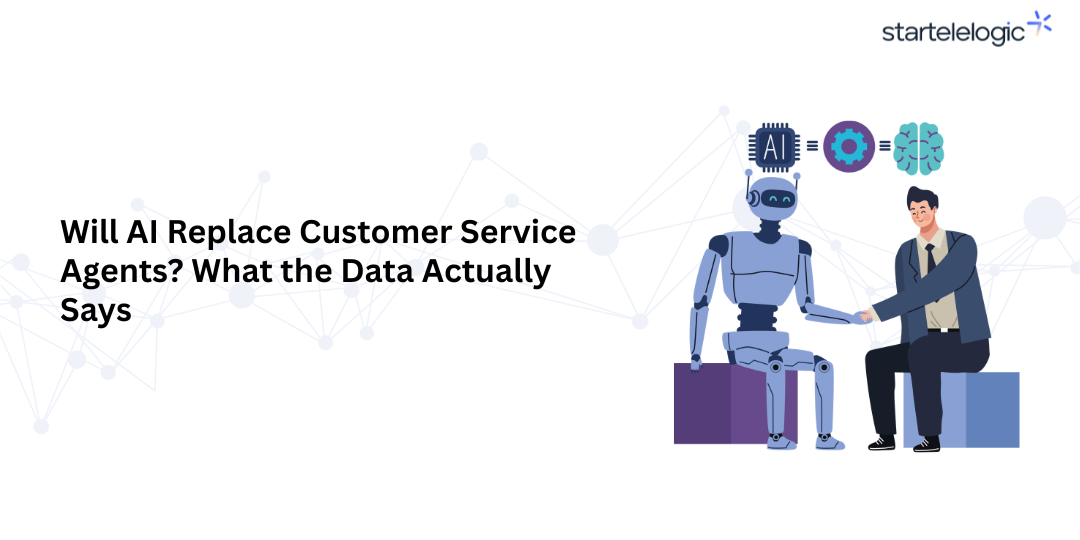
Emerging customer service industry trends suggest that the future lies in collaboration rather than competition between humans and machines. Organizations are increasingly investing in technologies that empower agents rather than replace them. AI-powered tools can provide real-time recommendations, automate administrative tasks, and surface relevant customer information during interactions.
This collaborative approach allows agents to focus on delivering exceptional customer experiences while AI handles time-consuming operational activities. As customer expectations continue to evolve, businesses are finding that combining AI efficiency with human expertise produces the most effective outcomes. The industry’s direction indicates a growing appreciation for the complementary strengths of both technologies.
The Impact of AI on Customer Service Jobs
The impact of AI on customer service employment is significant, but it does not necessarily translate into widespread job elimination. Instead, many roles are evolving to accommodate new technologies. Customer service professionals are increasingly required to work alongside AI systems, interpret automated insights, and handle more sophisticated customer interactions.
As routine inquiries become automated, agents are developing skills in problem-solving, relationship management, conflict resolution, and strategic communication. This transformation creates opportunities for career advancement while simultaneously requiring workforce adaptation. Employees who embrace AI as a productivity tool are likely to remain valuable contributors in the evolving customer support ecosystem.
Human Agents vs AI Chatbots: Which Delivers Better Customer Experiences?
The debate over human agents vs AI chatbots often overlooks the fact that customer experience depends heavily on context. AI chatbots excel when customers need quick answers, basic information, or assistance outside normal business hours. Their speed and availability can significantly enhance customer satisfaction for routine interactions.
Human agents deliver superior experiences when empathy, negotiation, or personalized problem-solving is required. Customers facing stressful situations often appreciate the reassurance and understanding that only a human representative can provide. The most successful customer service strategies recognize that both AI and human agents have important roles to play, and combining their strengths creates the most comprehensive support experience.
AI Customer Service Benefits and Limitations
Understanding AI customer service benefits and limitations is essential when evaluating its long-term impact. AI offers substantial advantages, including reduced response times, increased scalability, lower operational costs, and consistent service delivery. Businesses can handle larger customer volumes without proportionally increasing staffing levels, leading to significant efficiency gains.
However, AI also has limitations that prevent it from becoming a complete replacement for human agents. It may struggle with ambiguous requests, complex emotional situations, unusual scenarios, and interactions requiring ethical judgment. Customers can become frustrated when AI systems fail to understand their needs or provide inadequate solutions. These limitations highlight why human oversight remains crucial even in highly automated environments.
The Future of Customer Service Jobs in an AI-Driven World
The future of customer service jobs is likely to be shaped by collaboration between technology and human expertise. As AI capabilities continue to expand, customer service roles will increasingly focus on activities that require emotional intelligence, critical thinking, and relationship management. Employees who develop these uniquely human skills will remain highly valuable despite ongoing automation.
Rather than replacing agents, AI is expected to become an indispensable support tool that enhances productivity and service quality. Organizations that successfully integrate AI while investing in employee development will be best positioned to meet evolving customer expectations. This future points toward workforce transformation rather than workforce elimination.
Conclusion: Will AI Replace Customer Service Agents?
So, will AI replace customer service agents? The data suggests that the answer is no—at least not completely. AI is undoubtedly transforming customer support by automating repetitive tasks, improving efficiency, and enhancing service availability. However, human agents continue to provide essential capabilities that technology cannot fully replicate, including empathy, critical thinking, adaptability, and complex problem-solving.
The most likely future is one where AI and human agents work together to deliver better customer experiences. Businesses will continue investing in automation, but they will also rely on skilled professionals to manage sophisticated interactions and build lasting customer relationships. Rather than replacing customer service agents, AI is reshaping their roles and creating a more efficient, collaborative support environment.