
 Umesh Pande
Real-time video communication has become a natural part of everyday life. From virtual meetings and online classrooms to telemedicine and social conversations, users expect video calls to start instantly, run smoothly, and stay secure. Behind many of these experiences is WebRTC Real-Time Video Calling, a powerful technology designed to deliver real-time audio and video directly between users.
WebRTC, short for Web Real-Time Communication, is an open-source framework that allows browsers and applications to communicate without requiring plugins or additional software. What makes it special is how it handles complex networking, media transmission, and security while keeping the user experience simple and seamless.
Understanding WebRTC and Its Role in Real-Time Communication
To truly appreciate real-time communication using WebRTC, it helps to understand what WebRTC is trying to solve. Traditional video calling systems often relied on centralized servers or downloadable software, which added latency, cost, and complexity. WebRTC changes this approach by enabling direct communication between devices whenever possible.
WebRTC works inside modern web browsers and mobile applications, making it accessible across platforms. It supports audio, video, and data sharing in real time, which means developers can build everything from simple video chats to full-scale WebRTC video conferencing platforms. This flexibility has made WebRTC a foundational technology for modern real-time applications.
How WebRTC Works Behind the Scenes
When people ask how WebRTC works, the short answer is that it creates a direct, real-time connection between two or more devices. However, behind this simple idea is a carefully designed process that handles media capture, network discovery, and secure transmission.
WebRTC first accesses the user’s camera and microphone, turning raw input into optimized WebRTC media streams. It then determines the best possible network path between participants. Once a connection is established, WebRTC continuously monitors network conditions and adjusts video and audio quality in real time. This ensures that conversations remain clear and stable, even when bandwidth fluctuates.
WebRTC Video Calling Architecture Explained
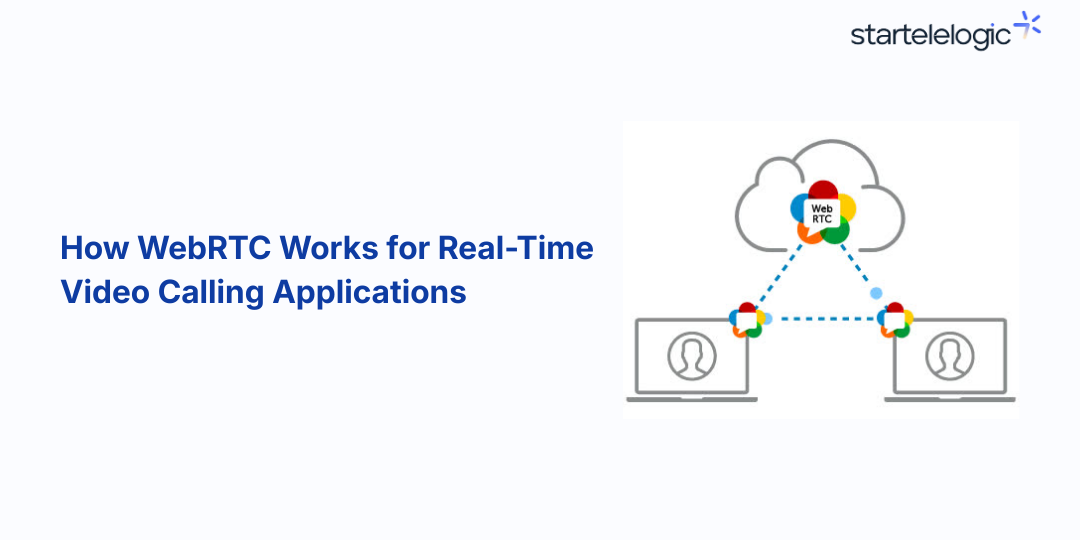
The WebRTC video calling architecture is built to be flexible and efficient. Rather than relying entirely on centralized servers, WebRTC favors peer-to-peer communication, allowing devices to exchange media directly. This reduces latency and improves call quality.
At the architectural level, WebRTC separates signaling from media transmission. Signaling is handled by the application, while media exchange is managed by WebRTC itself. This design gives developers freedom to customize how users connect while relying on WebRTC to handle the complex aspects of real-time media delivery. For larger applications like group calls, media servers can be added to scale communication without sacrificing performance.
The Importance of the WebRTC Signaling Process
The WebRTC signaling process plays a critical role in setting up a video call, even though it is not technically part of WebRTC. Signaling is responsible for exchanging messages between peers so they can understand each other’s capabilities and network details.
During signaling, peers share session descriptions that include supported codecs, media types, and connection information. This exchange allows both sides to agree on how the call will work. Once signaling is complete, WebRTC takes over and establishes the real-time connection. Without signaling, peers would have no way to find or communicate with each other.
WebRTC Peer-to-Peer Connection and Network Challenges
A key strength of WebRTC is its ability to create a WebRTC peer-to-peer connection. Direct connections reduce delay and provide a more natural conversation experience. However, real-world networks are often complicated by firewalls, NATs, and restrictive routers.
WebRTC intelligently navigates these challenges by testing multiple connection paths. It attempts to find the fastest and most reliable route between peers, prioritizing direct communication whenever possible. This dynamic approach allows WebRTC to work across a wide variety of networks, from home Wi-Fi to corporate environments.
Role of STUN and TURN Servers in WebRTC
To overcome network restrictions, STUN and TURN servers in WebRTC play an essential supporting role. STUN servers help devices discover their public-facing network addresses, making it possible to establish direct connections even when devices are behind NATs.
When direct connections are not possible, TURN servers act as a reliable fallback by relaying media between peers. Although TURN introduces slightly more latency, it ensures that calls remain functional under difficult network conditions. Together, STUN and TURN make WebRTC robust and dependable in real-world scenarios.
WebRTC Media Streams and Adaptive Performance
WebRTC media streams are designed with real-time performance in mind. Unlike traditional media streaming, WebRTC prioritizes low latency over perfect visual quality. This means audio and video are delivered as quickly as possible, even if network conditions change.
WebRTC continuously adapts bitrate, resolution, and frame rate based on available bandwidth. If a network becomes unstable, WebRTC lowers video quality to maintain smooth audio, ensuring conversations remain understandable. This adaptive behavior is especially important for WebRTC for real-time applications where delays or interruptions can break the user experience.
WebRTC for Real-Time Applications and Video Conferencing
The versatility of WebRTC makes it suitable for a wide range of use cases. From one-on-one calls to large-scale WebRTC video conferencing, the technology scales to meet different application needs. Many modern collaboration tools, virtual classrooms, and customer support platforms rely on WebRTC to deliver instant communication.
For multi-user scenarios, WebRTC is often combined with media servers that distribute streams efficiently. This hybrid approach allows applications to support dozens or even hundreds of participants while maintaining real-time performance and reliability.
WebRTC Security and Encryption in Video Calling
Security is a fundamental part of WebRTC, not an optional feature. WebRTC security and encryption are enforced by design, ensuring that all audio, video, and data streams are protected. WebRTC uses strong encryption protocols to prevent unauthorized access and eavesdropping.
Every WebRTC connection is encrypted end-to-end, which makes it suitable for sensitive use cases such as healthcare, finance, and enterprise communication. This built-in security gives both developers and users confidence that their real-time interactions are private and protected.
Why WebRTC Is Ideal for Real-Time Video Calling
WebRTC Real-Time Video Calling stands out because it combines performance, flexibility, and security into a single technology. It removes the need for plugins, works across devices, and adapts to changing network conditions in real time.
As the demand for instant, high-quality communication continues to grow, WebRTC remains one of the most reliable and future-ready solutions. By handling the technical complexity behind the scenes, WebRTC allows developers to focus on creating meaningful, human-centered communication experiences — exactly what modern users expect.
Frequently Asked Questions (FAQs)
1. What is WebRTC Real-Time Video Calling?
WebRTC Real-Time Video Calling refers to using Web Real-Time Communication technology to enable instant audio and video communication directly between users. It allows browsers and mobile applications to support video calls without plugins, while maintaining low latency, high quality, and strong security.
2. How does WebRTC work for video calling?
To explain how WebRTC works, it captures audio and video from a user’s device, establishes a secure connection between participants, and streams media in real time. WebRTC uses a signaling process to exchange connection details and then creates a peer-to-peer connection whenever possible for fast and efficient communication.
3. What is the role of signaling in WebRTC?
The WebRTC signaling process is used to exchange session information such as media capabilities and network details between peers. Although signaling is not part of WebRTC itself, it is essential for setting up and managing real-time video calls before media streaming begins.
4. Why are STUN and TURN servers needed in WebRTC?
STUN and TURN servers in WebRTC help devices connect across complex networks. STUN servers assist in discovering public IP addresses for direct connections, while TURN servers act as a fallback by relaying media when peer-to-peer connections are blocked by firewalls or NATs.
5. Is WebRTC secure for real-time video communication?
Yes, WebRTC security and encryption are built in by default. All audio, video, and data streams are encrypted using strong protocols, ensuring that real-time communication using WebRTC is protected from unauthorized access or interception.
6. What types of applications use WebRTC?
WebRTC is widely used in WebRTC for real-time applications such as video conferencing platforms, online education tools, telemedicine systems, customer support chat, and live collaboration software. Its flexibility and performance make it suitable for both small-scale and large-scale real-time communication solutions.