 Umesh Pande
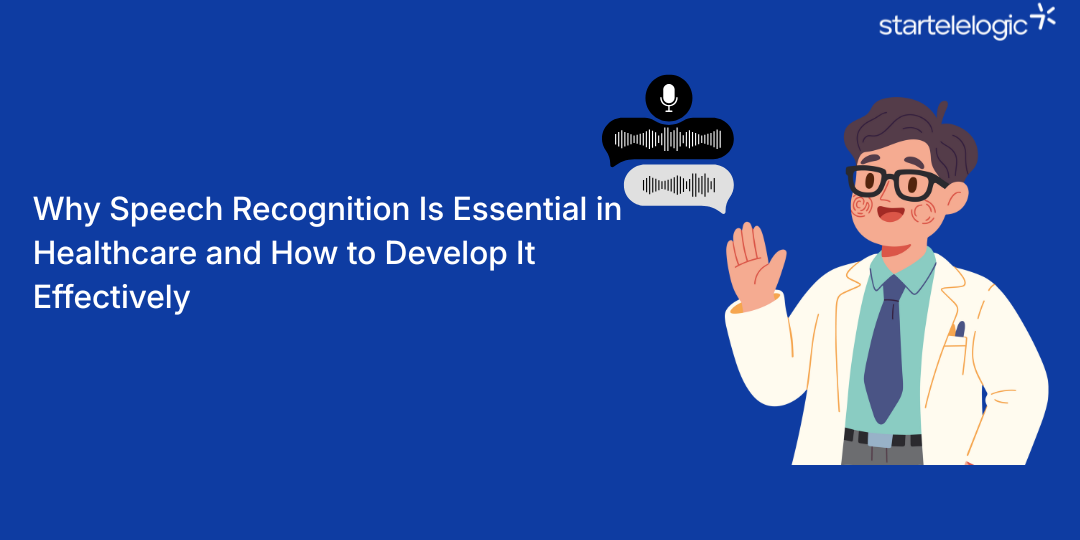
Healthcare Speech Recognition has emerged as one of the most transformative innovations in modern medicine, redefining how healthcare professionals interact with technology. It bridges the gap between clinical expertise and digital documentation, enabling doctors, nurses, and specialists to spend more time with patients instead of being tied to keyboards and screens. Studies suggest that clinicians spend nearly 35% to 50% of their working hours on documentation alone, often leading to burnout and reduced patient engagement. Speech recognition technology helps reclaim much of that time by converting spoken language into accurate, structured text within seconds. Hospitals and clinics using advanced speech recognition systems have reported up to a 40% reduction in documentation time and a noticeable improvement in record accuracy. This shift not only streamlines workflows but also enhances the quality of care, as medical professionals can focus on meaningful interactions and timely decision-making rather than administrative burdens.
The Growing Importance of Speech Recognition in Healthcare
Healthcare professionals often face overwhelming documentation demands. Every patient encounter requires detailed notes, reports, and updates to electronic health records. Traditional typing or manual transcription consumes valuable time and can lead to fatigue or errors. Healthcare Voice Recognition offers a practical solution—allowing clinicians to dictate notes naturally while the system transcribes them instantly and accurately.
This technology not only saves time but also enhances the quality of care. Doctors can maintain eye contact with patients, engage in meaningful conversations, and record observations in real time. The result is a more human-centered healthcare experience supported by intelligent automation.
The Role of AI Medical Transcription
AI medical transcription has evolved far beyond traditional voice-to-text tools. Modern systems rely on advanced natural language processing and machine learning to understand medical terminology, context, and even regional accents. Furthermore, they can differentiate between similar-sounding terms, recognize drug names, and format data according to clinical standards.
In addition, AI medical transcription supports multilingual environments, enabling providers to serve diverse patient populations more effectively. The technology continues to learn from feedback and corrections, which gradually boosts its accuracy. Consequently, AI-powered transcription has become a dependable partner in modern clinical documentation.
Healthcare Voice Assistant: A New Era of Interaction
A Healthcare voice assistant extends the power of speech recognition into daily workflows. It allows clinicians to perform tasks through voice commands—such as retrieving patient records, scheduling appointments, or ordering lab tests—without touching a keyboard or screen. This hands-free interaction is especially valuable in sterile or high-pressure environments like operating rooms or emergency departments.
Beyond convenience, a Healthcare voice assistant enhances accessibility. It supports clinicians with disabilities, reduces cognitive load, and ensures that critical information is always within reach. The integration of voice technology into healthcare systems marks a shift toward more intuitive and responsive digital tools.
Clinical Documentation Automation and Its Impact
Clinical documentation automation combines speech recognition, AI medical transcription, and data processing to streamline recordkeeping. Instead of manually entering data, clinicians can dictate notes that are automatically categorized, coded, and stored in the correct sections of the electronic health record. This automation reduces administrative burden, minimizes errors, and ensures compliance with healthcare regulations.
Automated documentation also improves data consistency. Structured and standardized records make it easier to analyze patient outcomes, identify trends, and support research. Hospitals adopting Clinical documentation automation often report faster turnaround times for reports and improved staff satisfaction.
The Role of Medical Dictation Software
Medical dictation software remains the foundation of Healthcare Speech Recognition. It provides the interface through which clinicians record their notes, whether through mobile devices, desktop applications, or integrated hospital systems. Modern medical dictation software supports real-time transcription, voice commands, and secure cloud storage.
Security and privacy are critical in healthcare, and advanced dictation tools use encryption and access controls to protect sensitive patient data. Integration with electronic health record systems ensures that dictated notes are automatically linked to the correct patient files, reducing the risk of misplacement or duplication.
Developing Effective Healthcare Speech Recognition Systems
Creating a reliable Healthcare Speech Recognition system requires a deep understanding of both technology and clinical practice. Several key factors contribute to success:
- Medical Vocabulary Training – The system must be trained on extensive medical datasets to recognize terminology, abbreviations, and context-specific language.
- Noise Handling – Hospitals are noisy environments. Effective systems use noise-cancellation and contextual filtering to maintain accuracy.
- User Adaptation – Speech patterns vary among clinicians. Adaptive learning allows the system to adjust to individual voices and accents.
- Integration Capabilities – Seamless connection with electronic health records, scheduling tools, and reporting systems ensures smooth workflows.
- Data Security – Compliance with healthcare privacy standards such as HIPAA is essential to protect patient information.
- Continuous Improvement – Regular updates and feedback loops help refine accuracy and expand functionality over time.
The Future of Voice-Driven Healthcare
As Healthcare Speech Recognition continues to evolve, its potential extends beyond transcription. Future systems may analyze tone, detect emotional cues, and assist in diagnostic decision-making. Combined with AI medical transcription and Clinical documentation automation, these tools will create a fully connected ecosystem where information flows effortlessly between patients, clinicians, and systems.
Healthcare is moving toward a model where technology supports rather than interrupts human interaction. Speech recognition stands at the center of this transformation—turning spoken words into actionable data and freeing medical professionals to focus on what matters most: caring for patients.
FAQs About Healthcare Speech Recognition
1. What is Healthcare Speech Recognition and how does it work?
Healthcare Speech Recognition is a technology that converts spoken medical dictation into written text. It uses AI, natural language processing, and machine learning to understand clinical terminology, context, accents, and speech patterns, providing accurate real-time transcription.
2. Why is Healthcare Speech Recognition becoming essential in modern healthcare?
Healthcare Speech Recognition reduces documentation time, minimizes manual data entry, and allows clinicians to focus more on patient care. It enhances efficiency, accuracy, and overall workflow, making it a critical tool in today’s fast-paced healthcare environment.
3. How accurate is Healthcare Speech Recognition for medical terminology?
Modern Healthcare Speech Recognition systems are highly accurate due to specialized medical vocabulary training, adaptive learning, and context-aware processing. They can recognize complex medical terms, drug names, and clinical abbreviations with impressive precision.
4. Can Healthcare Speech Recognition integrate with electronic health record (EHR) systems?
Yes. Most advanced Healthcare Speech Recognition solutions integrate seamlessly with popular EHR platforms. This integration ensures dictated notes are automatically stored in the correct patient records, improving documentation consistency and workflow efficiency.
5. Is Healthcare Speech Recognition secure and compliant with privacy standards?
Absolutely. Leading Healthcare Speech Recognition tools are designed to comply with healthcare privacy regulations such as HIPAA. They use encryption, access controls, and secure cloud infrastructure to protect sensitive patient data.
6. How does Healthcare Speech Recognition benefit clinicians in high-pressure or hands-free environments?
Healthcare Speech Recognition, often combined with voice assistants, enables hands-free access to patient information, order entry, and task management. This is especially valuable in operating rooms, emergency departments, and sterile environments where manual input is limited.
7. What factors should be considered when developing a Healthcare Speech Recognition system?
Key factors include medical vocabulary training, noise-handling capabilities, user-specific adaptation, EHR integration, strong data security, and ongoing system improvements. These elements ensure accuracy, usability, and long-term reliability.