 Umesh Pande
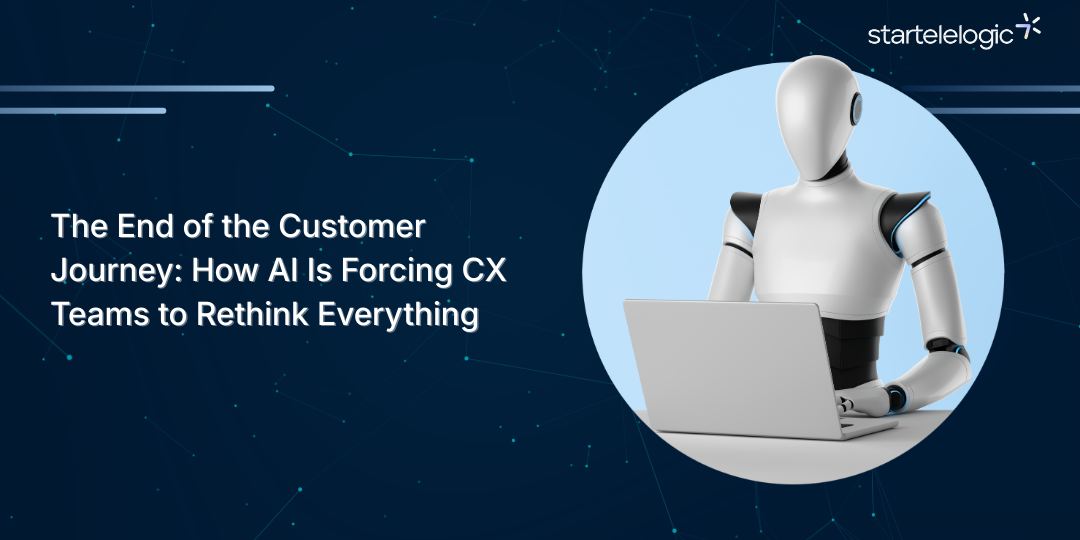
For decades, the customer journey has been the foundation of customer experience strategy. Brands mapped awareness, consideration, purchase, and loyalty as a neat, linear path. But today, that model no longer matches how customers behave. People jump between devices, channels, and platforms in unpredictable ways, often expecting brands to recognize them instantly and respond without friction. Research shows that more than 70% of customers expect companies to understand their needs in real time, and nearly 60% are willing to switch brands after a single poor experience. These rising expectations are being shaped by intelligent technologies that personalize interactions instantly. This is where AI-driven customer experience is changing everything. Artificial intelligence is not just improving CX—it is redefining how experiences are designed, delivered, and continuously optimized.
Why the Traditional Customer Journey Is Breaking Down
The classic customer journey assumes that customers move step by step through predefined stages. In reality, modern customers do not follow a straight line. They may discover a brand on social media, research it through search, ask questions via chat, abandon the process, and return later through email or an app. This behavior makes static journey maps outdated and ineffective. AI in customer experience addresses this challenge by shifting focus from rigid stages to real-time understanding. Instead of guessing where a customer is in a journey, AI analyzes behavior as it happens and responds based on intent. This flexibility is why many organizations are moving away from journey-based thinking altogether.
How AI Is Reshaping the Foundation of Customer Experience
Artificial intelligence in CX goes beyond automation and efficiency. It enables systems to learn from every interaction and continuously improve future experiences. AI can analyze vast amounts of customer data across touchpoints, identify patterns, and predict what a customer is likely to need next. This creates experiences that feel intuitive rather than scripted. An AI-powered customer experience allows brands to personalize content, timing, and channels without manual intervention, making interactions more relevant and meaningful. As a result, customer experience becomes adaptive instead of reactive.
From Isolated Touchpoints to Ongoing Experiences
In the past, CX teams focused on optimizing individual touchpoints, such as reducing call wait times or improving website usability. While important, these efforts often existed in silos. AI-driven customer experience connects these moments into a continuous, cohesive experience. AI remembers preferences, recognizes returning customers, and maintains context across channels. This continuity helps customers feel understood rather than starting over with every interaction. Over time, this approach builds stronger trust and loyalty, which are critical in a competitive digital environment.
Customer Experience Transformation Powered by Intelligence
True customer experience transformation is not about adding new tools; it is about changing how decisions are made. AI enables CX teams to move from delayed reporting to real-time insight. Instead of analyzing what went wrong after the experience is over, teams can identify issues and opportunities while interactions are still happening. This allows organizations to respond faster, personalize more effectively, and continuously refine experiences. When intelligence is embedded into daily CX operations, transformation becomes an ongoing process rather than a one-time project.
CX Strategy in the Age of AI
A successful CX strategy in the age of AI requires a shift in mindset. AI should not be viewed as a replacement for human teams but as a partner that enhances their capabilities. While AI processes data and predicts outcomes, humans bring empathy, creativity, and strategic judgment. Together, they create more balanced and effective experiences. CX leaders must focus on collaboration, experimentation, and learning, using AI insights to guide decisions rather than relying on fixed playbooks. Strategy becomes flexible, evolving alongside customer behavior.
The Impact of AI on CX Teams
The AI impact on CX teams is changing how roles are defined and valued. Routine tasks such as data analysis, ticket routing, and basic responses are increasingly handled by AI. This allows CX professionals to focus on higher-value work, including experience design, relationship management, and strategic planning. Rather than reducing the importance of CX teams, AI elevates their role within the organization. Teams that embrace this shift are better positioned to deliver consistent, emotionally intelligent experiences.
Rethinking Customer Experience Strategy for a Changing World
As AI capabilities grow, organizations must start rethinking customer experience strategy from the ground up. Instead of designing experiences around channels or products, the focus should be on customer intent, context, and timing. AI enables real-time adaptation, but only if companies are willing to move away from rigid control. This means accepting continuous testing, learning from data, and refining experiences over time. The goal is not perfection but responsiveness.
The Future of Customer Experience
The future of customer experience will be predictive, personalized, and increasingly proactive. AI will anticipate customer needs before they are explicitly stated and deliver support or recommendations at the right moment. However, success will depend on using AI responsibly, balancing personalization with privacy and automation with authenticity. Brands that achieve this balance will stand out by creating experiences that feel helpful rather than intrusive.
Conclusion: Moving Beyond the Customer Journey
The traditional customer journey is no longer sufficient in a world shaped by real-time expectations and intelligent systems. AI-driven customer experience offers a new way forward—one that prioritizes adaptability, relevance, and continuity. By embracing AI in customer experience, investing in customer experience transformation, and evolving CX strategy in the age of AI, organizations can move beyond outdated journey maps and build experiences that truly reflect how customers live, think, and engage today.
Frequently Asked Questions: AI and the End of the Customer Journey
Q1. What does “the end of the customer journey” really mean?
It means the traditional, linear journey model no longer reflects real customer behavior. Customers move unpredictably across channels, and AI-driven customer experience focuses on responding to intent in real time rather than forcing interactions into fixed stages.
Q2. How is AI-driven customer experience different from traditional CX?
Traditional CX relies on static data and predefined workflows, while AI-driven customer experience adapts dynamically using real-time data and predictive insights to personalize interactions as they happen.
Q3. Why is AI in customer experience now essential?
Rising customer expectations demand speed, personalization, and consistency. AI in customer experience enables brands to meet these demands at scale, something human-only teams cannot achieve alone.
Q4. How does artificial intelligence in CX affect CX teams?
Artificial intelligence in CX shifts teams toward strategic, insight-driven roles by automating repetitive tasks and freeing time for experience design and relationship building.
Q5. How does AI-powered customer experience support transformation?
An AI-powered customer experience enables continuous learning and real-time improvement, turning CX into a proactive and predictive function rather than a reactive one.
Q6. What should companies focus on for the future of CX?
To succeed in the future of customer experience, companies must prioritize adaptability, ethical data use, and customer-centric design while continuously refining their CX strategy in the age of AI.